
From priorities to actions at the IUCN Congress
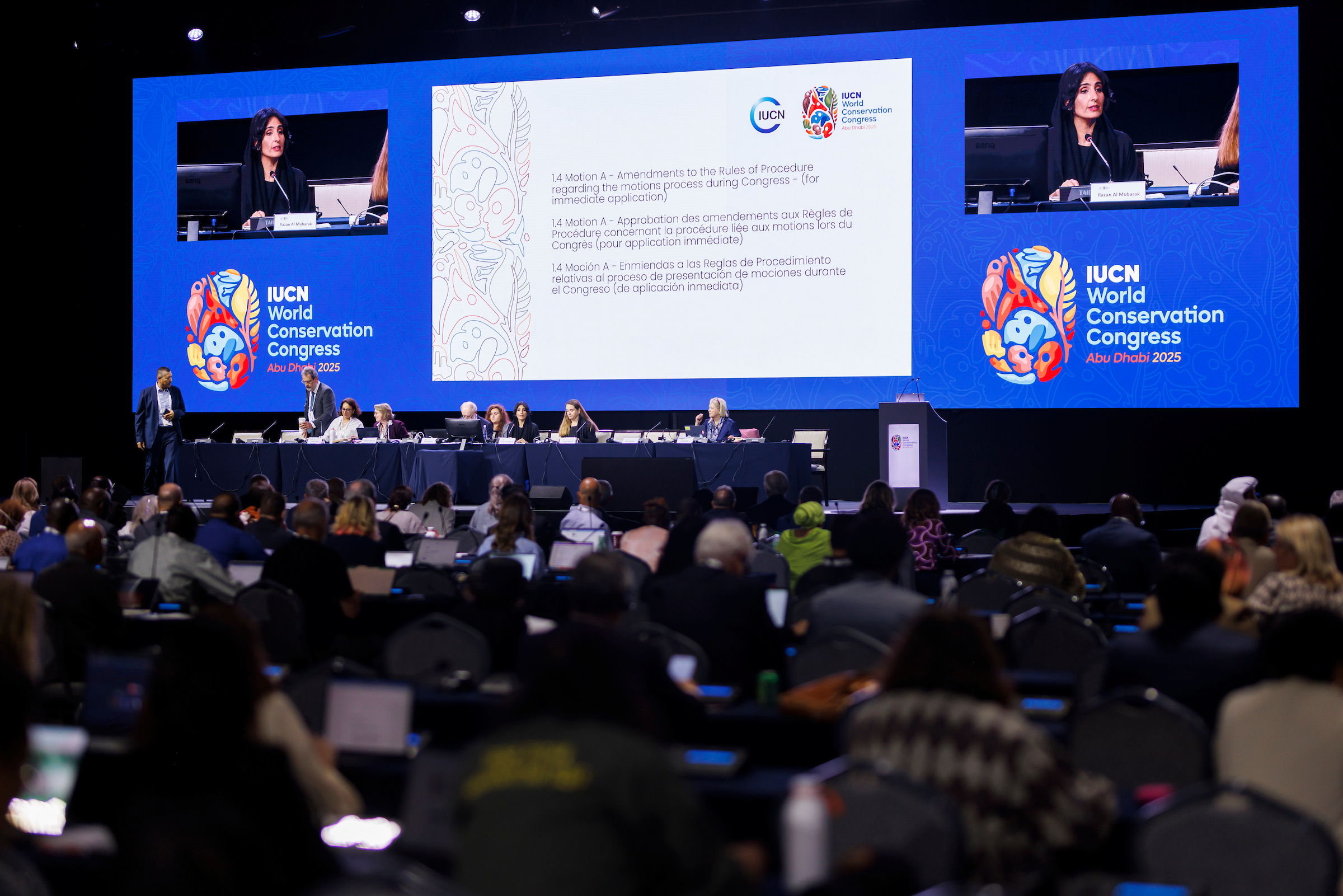
Early October in Abu Dhabi, more than 10,000 participants hailing from over 140 countries converged at the IUCN World Conservation Congress, united by a deep commitment to nature. This quadrennial gathering is more than a forum to debate global conservation priorities, and this year particularly one may emphasise that this was a “Solutions Congress”: a platform to catalyse action, including channelling more finance into nature restoration, conservation and stewardship. Unlike many conferences that end with lofty declarations, this meeting insisted on tangible instruments and pathways forward, including the role of high-integrity nature credits.


Money matters to nature
To appreciate the stakes, one must grasp how stark the financial gap is. Current assessments suggest global biodiversity conservation receives USD 124–143 billion annually, while an estimated gap of USD 942 billion remains to meet the goals of the Global Biodiversity Framework.
Approximately 80% of current conservation funding still comes from public sources (governments and multilateral institutions). That means private capital, philanthropy and market instruments must scale rapidly if we are to close the gap. The Global Biodiversity Framework itself includes Target 19, which explicitly mentions biodiversity credits as one of several financial mechanisms for resource mobilisation.
In short: the financing shortfall is enormous, and expecting governments alone to carry the burden is unrealistic.
The “Solutions Congress” in action
When we spoke on the closing stage on Sunday, we weren’t signalling the end of the conversation - we were signalling a shift into urgent implementation. Across dozens of sessions, side meetings and panel dialogues, one theme resonated repeatedly: how to generate more investment in biodiversity, channel more funds to Nature’s stewards and, through this, support the inclusive development of nature-rich countries committed to Nature restoration and preservation.
The question thus arises of how to translate this “financing nature” discussion into programs, pilots and regulatory guardrails that can be applied now because, at the end of the day, this is essential for nature and for our economies.
This strong interest on biodiversity certificates and credits could be felt at the IUCN Congress and was confirmed by the adoption of the Resolution 078, which recognises these tools as essential to financing nature.
Biodiversity credits: A key tool in a large toolbox
Biodiversity credits sit within the broader category of “nature credits” – economic instruments that link measurable positive nature outcomes across a range of ecosystem services to funding mechanisms. In practical terms:
A biodiversity credit (or “biocredit”) is a certificate that represents a measured and evidence-based unit of positive biodiversity outcome that is durable and additional to what would have otherwise occurred.
Credits represent the biodiversity outcomes linked to a project and can be sold and issued throughout the project lifecycle. Certificates provide validated proof that inputs, outputs and outcomes have been achieved.
Buyers (corporations, governments, multilateral development banks, philanthropic funds, financial institutions) can purchase credits, thereby directing money to projects that generate real, additional biodiversity benefits.
Biodiversity credits can be used to support both conservation and restoration of nature including maintenance activities.
The goal is not to monetise nature itself but to monetise the results of actions that produce ecological value, making them investable.
As many at the Congress stressed, biodiversity credit markets must embed high integrity, strong governance and social equity from the start, not as afterthoughts. This is what the International Advisory Panel on Biodiversity Credits, of which we both are members, is addressing through our Framework for high-integrity biodiversity credit markets. This Framework was developed with input from over 120 experts from varied disciplines (including Indigenous Peoples and scientists) and more than 25 countries.
Varieties, challenges and regional considerations
Multiple flavours of nature credits
Credits can be bought for different reasons and under different circumstances. One may buy a credit to make a positive contribution outside of the buyers’ direct impact; we call this “evidence-based contributions”. Similarly, a buyer may buy a credit for local compensation of direct impacts on biodiversity (under strict conditions and only after the “mitigation hierarchy” has been followed). Thirdly, a company may seek a proactive investment within its supply chain for transition and resilience reasons; for example, to enhance biodiversity-related productivity and mitigate associated risks – this is what we call “supply chain insetting”.
Additionally, credit systems can be voluntary, where companies or individuals choose to buy credits, or may be compliance schemes, which means they are required in certain jurisdictions.
Certain regions may prioritise specific credit types. For example, in arid or water-stressed regions, water credits might be an early stepping stone. In forested areas, forest conservation credits might figure heavily.
Integrity is paramount
Credit systems are vulnerable to a host of pitfalls, from weak baselines to double counting to “greenwashing” claims. We have witnessed many of these in the carbon markets. To ensure high integrity and, as a result, credibility and impact, the IAPB Framework puts forward key principles and guidance on: robust biodiversity baselines and additionality; permanence and durability (ensuring the biodiversity benefits endure over time); independent verification and monitoring by trusted third parties; legal clarity on rights to biodiversity, land and the “right to claim” benefits; and most importantly on community consent, participation, equity, and benefit sharing, especially with Indigenous Peoples and local communities as stewards of nature.
In closing: A Congress of action, not closure
When we walked off that stage the lights didn’t dim on a finished conversation. We stepped forward into a space of collective urgency. The next crucial phase, turning ambition into scalable, high-integrity action, lies ahead.
The IUCN Congress in Abu Dhabi did something rare: it planted seeds of expectation, critical collaboration and momentum. Over the coming months and years, success will depend on partnerships, adaptive governance, rapid innovation and willingness to learn from missteps. If nature credits, backed by public, private, and philanthropic capital, can deliver high impact for nature and people, they may become a powerful tool to finance a living planet.
Disclaimer
Opinions expressed in posts featured on any Crossroads or other blogs and in related comments are those of the authors and do not necessarily reflect the opinions of IUCN or a consensus of its Member organisations.
IUCN moderates comments and reserves the right to remove posts that are deemed inappropriate, commercial in nature or unrelated to blog posts.
The 30th Conference of the Parties to the United Nation Framework Convention of Climate Change (…

Victoria Falls, Zimbabwe, 24 July 2025 — The Indo-Burma Ramsar Regional Initiative (IBRRI)…
World Wetlands Day is celebrated annually on 2 February. To celebrate this year’s theme of “…