IUCN co-hosted events | ||
| Date | Event title | Time |
| Monday, 24 Nov 2025 | Samarkand Declaration This session will introduce the state of wildlife trade in the region and priorities for action. It will highlight the political will and shared vision among the five Central Asian nations to safeguard biodiversity, enable legal and sustainable trade, and dismantle transboundary trafficking networks. It will also offer a platform for dialogue with CITES Parties and partners on opportunities for collaborative implementation, technical assistance, and investment in community-based conservation. Hosts: Ministry of Ecology, Environmental Protection and Climate Change of the Republic of Uzbekistan | TRAFFIC | IUCN | 12.15 - 13.45 |
| Wednesday, 26 Nov 2025 | Jaguars at a Crossroads Range States will share how their actions on jaguars under CITES and CMS can help achieve their commitments under the CBD and Global Biodiversity Framework, among other environmental initiatives, with great significance for Indigenous Peoples and Local Communities throughout Latin America. Hosts: Panthera | Brazil | Mexico | Global Wildlife Program | Inter American Development Bank | IUCN SSC Cat Specialist Group | UNDP | UNEP | UNODC | WCS | World Bank | WWF | CITES and CMS Secretariats | 17.15 - 18.45 |
| Thursday, 27 Nov 2025 | Hunting trophies policy Present analyses of trophy hunting, the threat to species from trophy hunting, and implications for policymaking, and draws on trophy hunting of African rhinoceroses as a case study. Hosts: IUCN SSC/CEESP Sustainable Use and Livelihoods Specialist Group | 19.00 - 20.30 |
| Friday, 28 Nov 2025 | CPW in Action & Beyond Showcase highlights from the Collaborative Partnership on Sustainable Wildlife Management (CPW) Work Plan 2023–2025, featuring collaborative efforts in areas such as legal coherence, human-wildlife conflict, One Health, and wildlife-based economies. It will also mark the official launch of the CPW Work Plan 2026–2028, a renewed framework designed to align with global biodiversity and development priorities while advancing practical, joint action across sectors. Hosts: CPW: FAO | CBD | CIFOR | CITES | CMS | CIC | IIED | IIFB | IUCN | IUFRO | TRAFFIC | UNEP | WOAH | 12.15 - 13.45 |
| Friday, 28 Nov 2025 | Is ‘Ranching’ relevant to aquatic species? Case studies, implications and challenges Examines ranching’s evolution, its relevance for aquatic species, and associated sustainability, legal, and enforcement challenges for CITES-listed taxa like Anguilla spp. and Cheilinus undulatus. Hosts: ADM Capital Foundation | WWF | TRAFFIC | International Council of Environmental Law | IUCN SSC Groupers and Wrasses Specialist Group | 17.15 - 18.45 |
| Saturday, 29 Nov 2025 | CITES' effectiveness It will focus on recognizing CITES successes and then evaluating how the Convention could be more successful. There will be a small number of presentations followed by a panel discussion and a broader discussion with attendees. The event relates to agenda items 13, 27, 29, 76, 84 and 114 (Proposals to amend Appendices I and II) Hosts: IUCN SSC/CEESP Sustainable Use and Livelihoods Specialist Group | 12.15 - 13.45 |
| Saturday, 29 Nov 2025 | Fish Maw Trade Impacts A panel of experts will explore the global scope of the fish maw trade, how it is affecting CITES-listed and other species, the urgent need for regulation of fisheries and trade, and the potential for collaboration between CITES and other intergovernmental organizations. They will discuss how CITES can provide a leadership role to improve the sustainability and traceability of the fish maw trade. Hosts: Animal Welfare Institute | BLOOM HK | Center for Biological Diversity | Environmental Investigation Agency | IUCN SSC Croaker and Drum Specialist Group | NRDC | WCS. | 17.15 - 18.45 |
| Saturday, 29 Nov 2025 | Progress in and tools for implementing CITES for seahorses Support Parties’ consideration of all seahorse related Decisions being proposed at CoP20, which focus on actions plans, capacity building, monitoring and illegal trade. These draft decisions build upon earlier CITES initiatives aimed at addressing illegal and unsustainable trade in dried seahorses - highlighting a strong shift toward better monitoring, enforcement action, and national-level planning to sustain populations. Hosts: IUCN SSC Seahorse, Pipefish & Seadragon Specialist Group | 19.00 - 20.30 |
| Tuesday, 2 Dec 2025 | IUCN Red List and CITES This event will highlight how the Red List informs and enhances CITES processes and detail important updates to the Red List since CoP19, including the reassessment of all amphibian species in 2023 and the global freshwater assessment in 2024. Hosts: IUCN | 12.15 - 13.45 |
| Wednesday, 3 Dec 2025 | Siem Reap Declaration Bring together range States, CITES authorities, intergovernmental agencies, and key conservation stakeholders to present concrete implementation steps taken since the Declaration’s adoption. It will examine how regional cooperation—through transboundary corridors, data sharing, harmonized enforcement and a range range-wide action plan—can be aligned with CITES mandates and mechanisms. Hosts: IUCN SSC Asian Elephant Specialist Group | Elephant range States | 12.15 - 13.45 |
| Wednesday, 3 Dec 2025 | Sustainable MAPs trade: Healing Plants, Healthy Trade through Strengthening CITES Implementation for Medicinal and Aromatic Plants Provide a platform for Parties and stakeholders to explore progress and next steps in implementing CoP19 Decisions 19.261–264, which call for enhanced capacity building, information exchange, and regional cooperation in the regulation of MAP trade. Hosts: TRAFFIC | IUCN SSC Medicinal Plant Specialist Group | UK CITES SA for Flora | Nepal CITES SA | 12.15 - 13.45 |
| Wednesday, 3 Dec 2025 | African Forest and Savanna Elephants: Update of the Status Report Present two landmark publications: the African Forest Elephant Status Report (AFESR) and the African Savanna Elephant Status Report (ASESR). These are the first separate reports since the recognition in 2021 of Loxodonta cyclotis and Loxodonta africana as distinct species, based on robust genetic, ecological, and morphological evidence. Hosts: IUCN SSC African Elephant Specialist Group | 17.15 - 18.45 |
IUCN at CITES COP20
From 24 November to 5 December 2025, IUCN will participate in the 20th meeting of the Conference of the Parties to the Convention on International Trade in Endangered Species of Wild Fauna and Flora (CITES COP20) in Samarkand, Uzbekistan.

Also known as the 20th World Wildlife Conference, COP20 marks the 50th anniversary of the entry into force of the convention under the slogan "CITES at 50 in Samarkand: Bridging Nature and People".
Parties will have before them a packed agenda with over 100 items, including 51 proposals to amend CITES Appendices I and II, amendments to existing Resolutions and are expected to take decisions related to the work of the Secretariat, its Committees and Parties for the next 3 years.
As a key technical advisor and observer organisation, IUCN brings its scientific expertise, conservation tools, and policy guidance to support evidence-based decision-making under CITES. At CoP20, IUCN will host side events, mobilise experts from its Species Survival Commission (SSC) to provide real-time scientific advice, and coordinate messaging among partners and Parties. Working in partnership with collaborating organisations, IUCN will also provide technical input on species listings, sustainable use, and wildlife trade policy.
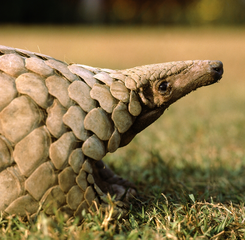
In preparation for the meeting, IUCN produced 2 reports on African and Asian rhinoceroses (CoP20 Doc. 84 Annex 3) and pangolins (CoP20 Doc. 79.1), and in collaboration with TRAFFIC, produced the Analyses of the Proposals to Amend the CITES Appendices, offering Parties independent, science-based evaluations of proposed amendments to the CITES Appendices, along with key implementation considerations.
The IUCN position paper on selected CoP20 agenda items, provide views and recommendations on amendments of CITES listings, decisions, and resolutions, promoting the application of IUCN knowledge products, including the Red List of Threatened Species, and advancing sustainable use and trade regulation in line with IUCN’s Nature 2030 Programme and World Conservation Congress Resolutions.