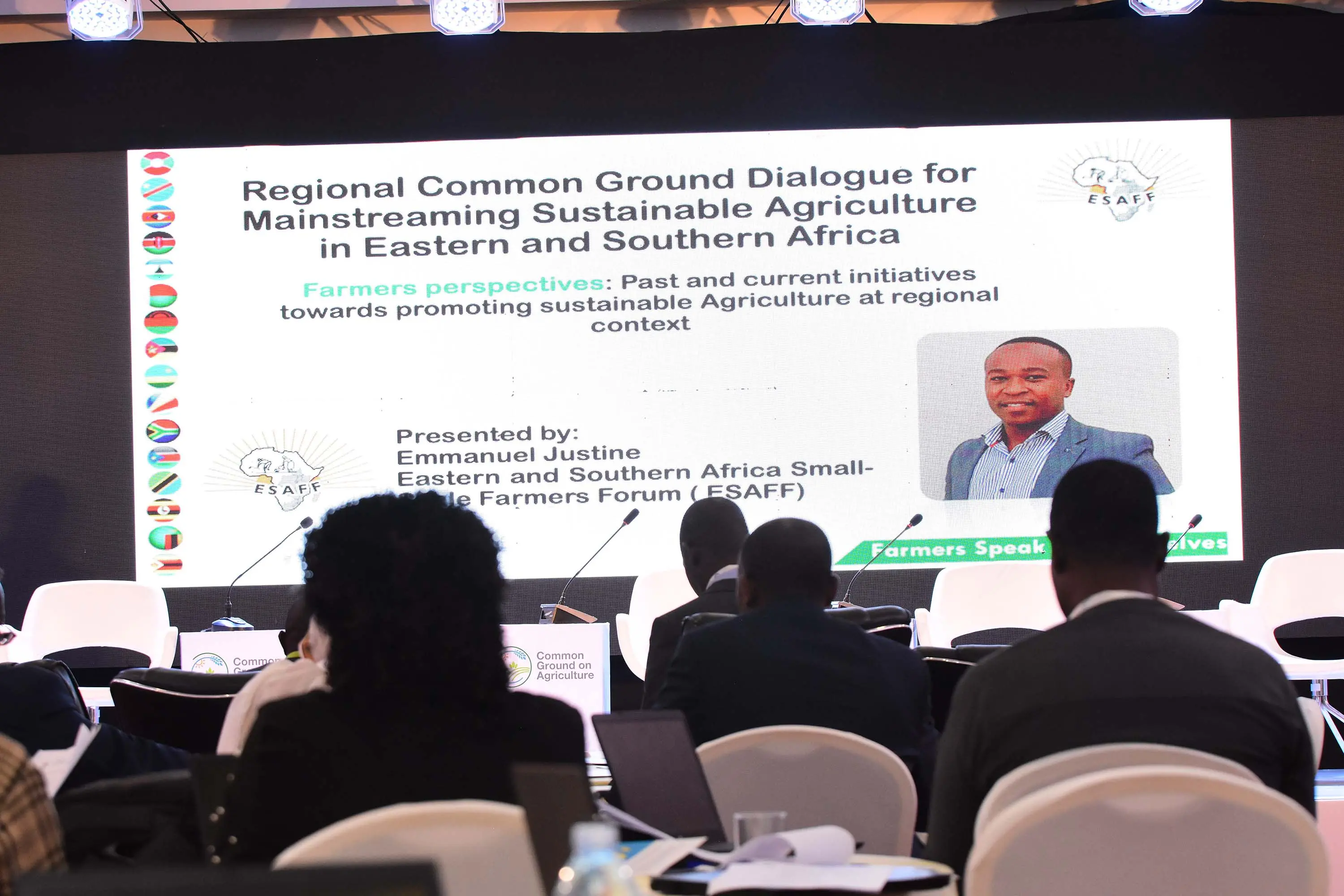
Change in the enabling environment is achieved by convening and facilitating multi-stakeholder dialogues and platforms and advocating for and facilitating the development and implementation of the governance systems, policies and action plans that result.

This work is performed at all geographic scales (landscape, national, regional and global) and includes facilitating the alignment of public and private investments towards supportive policies and action plans.

Promoting what we call “common ground dialogues” is a key focus of our work, as through dialogue we discover our common objectives around Nature and build consensus and convergence between the food and agricultural systems and conservation communities.

Equally important is strengthening the capacity of producers’ organizations, Indigenous Peoples and Local Communities’ organizations to be heard and advocate for their needs in the transition to sustainable agriculture and food systems in regional and global policy fora. 

Engagement in international conferences and summits

IUCN’s work in food and agricultural systems transformation is mainstreamed through a wide range of international policy fora. In 2024 the CBD CoP 16, Climate CoP29, and Desertification and Land CCD CoP16 were key opportunities, followed by 2025’s UN Food Systems Summit +4 and Climate CoP30.

More here


Common ground dialogues

IUCN’s Common Ground Dialogues ‒ based on the foundational Common ground report ‒ convene food and agricultural systems stakeholders in dialogue processes to foster consensus and catalyse collaborative action for a resilient and sustainable future in those systems.

Common ground report | IUCN

More here


The Forest and Farm Facility–smallholders and family farmer’s policy engagement

The Forest and Farm Facility (FFF) is a partnership between the Food and Agriculture Organization of the United Nations (FAO), the International Institute for Environment and Development (IIED), Agricord and IUCN, aiming to strengthen and empower forest and farm producer organizations (FFPOs), including women, youth and indigenous peoples, as primary change agents for climate resilient landscapes and improved livelihoods. Through FFF, IUCN works with regional and global farmers organizations to help them influence international policy. IUCN also supported the creation of the Family Farmers for Climate Action campaign.

The Forest and Farm Facility has published its 2024 Annual Report, showing that directing funds through FFPOs is an effective way to get rapid impact – FFPOs were at the centre of new programmes in 2024 valued at nearly US$110 million. The FFF made its highest disbursement in its history in 2024, at US$16.3 million, almost double the previous highest (US$8.30 million), recorded in 2023. Read the report here.

Forest and Farm Facility | Food and Agriculture Organization of the United Nations

More here


Biodev2030 ‒ landscape and national level multistakeholder platforms for policy change

Biodev2030 among other interventions in different sectors, promotes changes in agricultural production systems that reconcile biodiversity and economic and social development, addressing agriculture as one of the main drivers of biodiversity loss. This includes supporting multi-stakeholder platforms at national and landscape levels, identifying key policy instruments to change or introduce, helping to design nature-positive projects at landscape level and supporting resource mobilisation.

More here

Working with members

IUCN membership is composed of governments and civil society organisations, which are united under the common goal of protecting nature and conserving life on Earth.  From the World Conservation Congress to the Regional Conservation Fora, our member engagement harnesses IUCN’s collective expertise and capacity to influence global policy and drive transformative action.

More here

IUCN

Regenerative Food Systems at scale for nature, climate, and people (Regen10)


Regen10 was set up in response to the growing interest in regenerative food systems, with the key aim of putting farmers' needs and experiences at the centre of policy and business decisions designed to scale-up practices that can achieve regenerative outcomes.  As part of Regen10, IUCN leads on engagement with Indigenous Peoples Organisations across the globe to understand their food systems practices and how to prevent the reversal of the currently regenerative food systems in their landscapes. IUCN also supported Indigenous Peoples Organisations to provide inputs into the Regen10 Outcome Framework for regenerative agriculture. IUCN also leads on advancing global policy and advocacy, and providing science-based guidance to Regen10 partners and practitioners.

IUCN is a key partner of Regen10. IUCN is working with 1000 Landscapes for 1 billion people as part of Regen10 to strengthen and support landscape partnerships, which bring together stakeholders within the same landscape to develop and implement a shared approach to transitioning food systems. 

More here


Publications to guide policy makers

The IUCN Flagship Report series seeks to draw from multiple lines of evidence: novel analysis to bring together data based on IUCN standards, with authoritative external datasets and integrated assessment models; structured narrative literature review and synthesis; and case studies and examples from around the world. Policy makers can find the Flagship Report and other policy guidance in this section. 

More here

World Conservation Congress – Events

The World Conservation Congress is IUCN’s biggest event, taking place every 4 years. Read more about the 2025 Abu Dhabi edition and its food and agriculture related events here.

IUCN

World Conservation Congress – Motions

The World Conservation Congress is IUCN’s most important democratic moment. The 1,466 Resolutions and Recommendations that have been adopted at previous Congresses and General Assemblies since 1948, are the basis of IUCN’s general policy. This year sees a significant number of motions relevant to Food and Agricultural Systems: read the full details here

IUCN | Tim Gander | Workers Photos