Case study systematises the application of Nature-based Solutions for climate adaptation
IUCN and its Commission on Ecosystem Management publish a study on the application of the IUCN Global Standard for Nature-based Solutions in the Resilient Highlands project—one of the few such initiatives in Latin America.
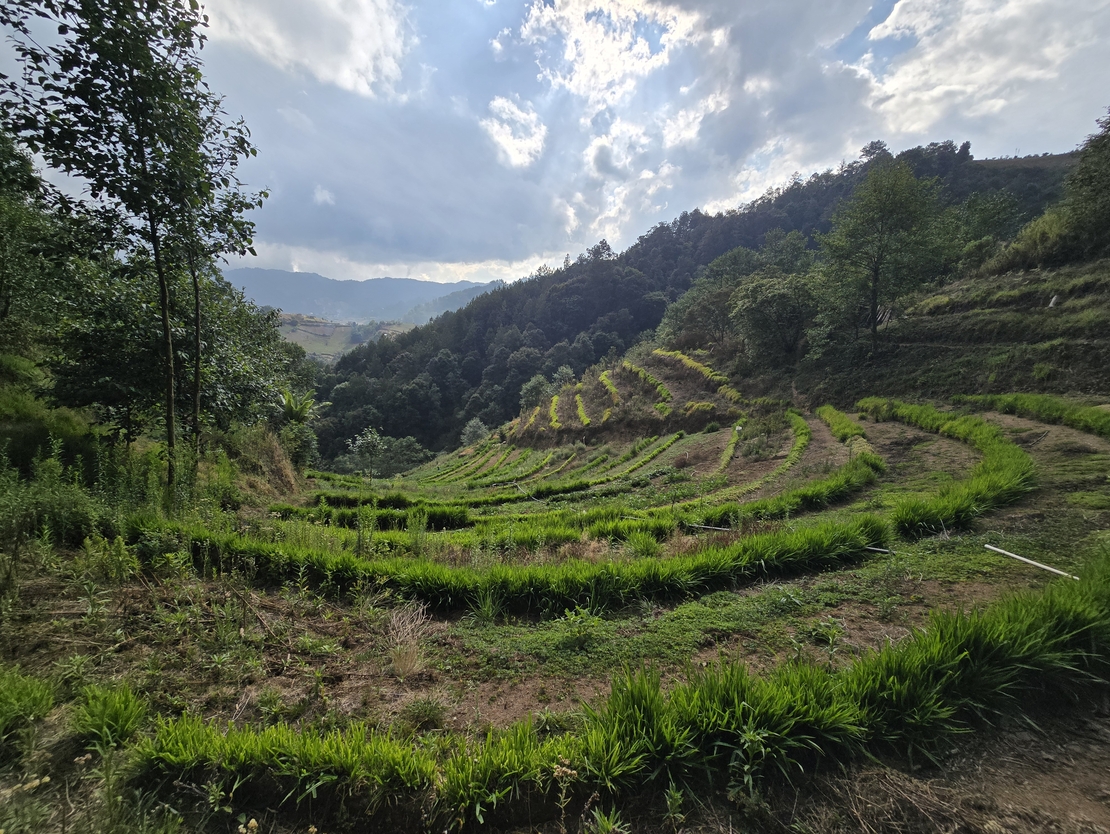
Guatemala City, Guatemala, 19 January 2026 (IUCN) IUCN’s Commission on Ecosystem Management (CEM) and the IUCN Regional Office for Mexico, Central America, and the Caribbean (ORMACC) present the publication "Applying the IUCN Global Standard for Nature-based Solutions (NbS) in the Guatemalan Highlands: A Case Study.", available in both English and Spanish.
The Global Standard for NbS emphasises a systemic approach, considering the interrelationships among natural, economic, social, and institutional components, and linking interventions to a broader landscape vision.
In particular, this study presents the results of applying the IUCN Global Standard for NbS Self-Assessment Tool, which have contributed to recent revisions aimed at improving this global standard.
The case study shows how this systemic vision can be operationalized on the ground through specific projects, drawing on the experience of the Resilient Highlands project. It is one of the few examples in Latin America of the application of the IUCN Global Standard for NbS.
Since 2021, the CEM has supported the implementation of the Resilient Highlands project, led by IUCN in the western highlands of Guatemala. This collaboration has strengthened the effective implementation of on-the-ground actions, enhancing the project’s impacts.
According to Manuela Fernández, lead author and member of the CEM, “NbS are actions and approaches inspired by nature that help address key challenges such as climate change adaptation and mitigation, as well as disaster risk reduction. The self-assessment of the Resilient Highlands project showed that implementation is more effective when technical and local knowledge are integrated, and when communities are involved from the outset, leading to more relevant and sustainable solutions.”
“Moreover, participation must go beyond consultation and move toward co-creation, engaging people in decision-making and ensuring shared benefits. NbS require long-term monitoring and maintenance, with clear responsibilities, strengthened local capacities, and adequate resources. Overall, the evaluation of the Resilient Highlands project allowed us to conclude that NbS work best when they are designed together with communities, managed collaboratively, and sustained with a long-term vision,” she added.
In turn, Raquel Sigüenza, IUCN Representative in Guatemala, stated: “We feel very honoured that a project from our country was selected to apply the Global Standard; the self-assessment yielded positive results and is the outcome of our work with partners and IUCN Members. The tool is very comprehensive, and its application generates valuable lessons learned and examples that the Resilient Highlands project shares with the community of sustainable agriculture practitioners through this publication. It provides evidence of the key role that public policies and incentives play as enabling factors, while also helping to guide institutional decision-making. Of one thing we are certain: working with NbS always generates a return on investment. In the Highlands, they are an excellent tool to increase the resilience of Indigenous Peoples and local communities.”
This publication aims to make the implemented methodology accessible and offer an example that simplifies self‑assessment processes, promotes stakeholder training, and clarifies the concept of NbS for addressing key climate mitigation and adaptation challenges, while benefiting both people and nature.
Overall, the self-assessment results showed that the Resilient Highlands project's theory of change scored an average of 91%, confirming it is adhering to the IUCN Global Standard for NbS.

Graph illustrating the Resilient Highlands project self-assessment results based on the IUCN Global Standard for Nature-Based Solutions. An overall average score of 91% confirms the project's compliance with the standard.
These results have been shared in the Mexico 2024 IUCN Regional Conservation Forum, in training sessions for Guatemalan government agencies, and in the Professional Certificate course on the IUCN Global Standard for NbS, taught by the IUCN Academy to an international audience.
Resilient Highlands
Since 2020, the Resilient Highlands project has worked to reduce the negative impacts of climate change on the water cycle in Guatemala’s highland watersheds, increasing the resilience of ecosystems and local communities.
Resilient Highlands is implemented by the Ministry of Environment and Natural Resources (MARN), MAGA, the National Forest Institute (INAB), and INSIVUMEH.
The project receives technical and financial support from the International Union for Conservation of Nature (IUCN), in partnership with the Foundation for the Conservation of Natural Resources and the Environment in Guatemala (FCG) and Rafael Landívar University, through the Institute of Agriculture, Natural Resources and Environment (IARNA) of the Vice-Rectorate for Research and Outreach (URL-VRIP).
The project is funded by the Green Climate Fund (GCF) and the Korea International Cooperation Agency (KOICA).


El sistema keyline o línea clave, impulsado por la UICN en el altiplano occidental de Guatemala, a...

La UICN y su Comisión de Gestión de Ecosistemas publican estudio sobre la aplicación del Estándar...

Delegación del Ministerio de Desarrollo Agropecuario de Panamá visitó Guatemala para conocer la...