Tech4Nature: How low-cost innovation and traditional knowledge are helping Amazonian communities confront a changing coastline
Stretching across more than 8,000 km² on Brazil’s northern coast, the Amazon mangroves form one of the planet’s largest continuous mangrove ecosystems — a living shield between the Atlantic Ocean and the great rainforest. For generations, this landscape has sustained thousands of families who depend on fishing, crabbing and forest resources for their livelihoods. Today, however, the coastline is changing faster than ever. Rising sea levels, stronger tidal surges and accelerated erosion are reshaping Marajó Island near Belém, in the state of Pará, placing both people and nature at risk.
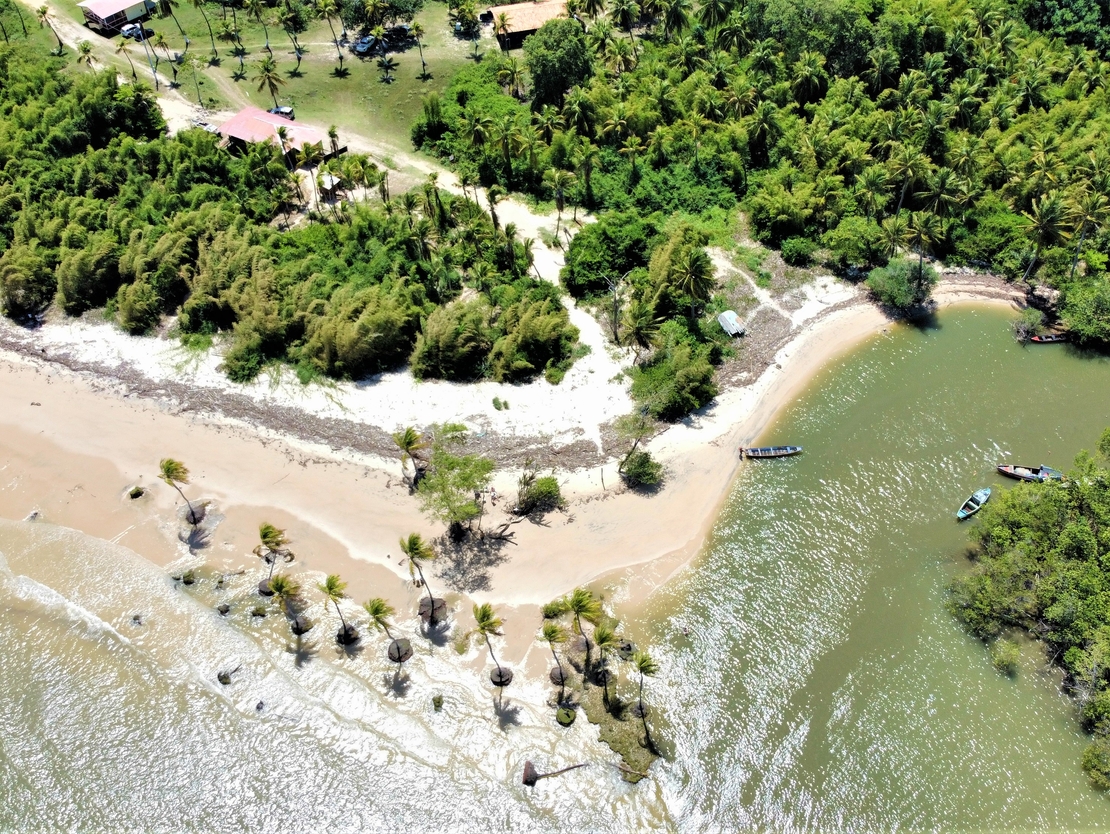
In the island’s Soure Marine Extractive Reserve (RESEXMAR), these impacts are no longer distant warnings; they are transforming daily life. Beaches have collapsed, sandbanks have vanished and, in Pesqueiro Beach alone, more than fifteen homes have been destroyed by the advancing sea. Where mangrove belts had once acted as natural barriers, clearing or thinning left some stretches exposed, making storm surges more destructive. Families now live in constant uncertainty, watching the coastline move closer each year.


Understanding a rapidly changing coastline
Against this backdrop, the Tech4Nature initiative, implemented by IUCN and Rare Brazil, is helping the community tackle climate change with something they have long lacked: reliable, continuous and accessible data. While traditional knowledge remains central to how residents understand their landscape, the rapid pace of environmental change demands the support of new tools. Tech4Nature provides that bridge by combining science-based local experience and knowledge with modern fit-for-purpose technology, which in this case is designed specifically for remote, low-resource settings. The initiative in Brazil is part of a broader global partnership launched by Huawei and IUCN in 2020 to scale up success in nature conservation through technological innovation.
At the core of the project in Soure is a low-cost oceanographic and meteorological station created by Brazilian researchers from the Federal University of Pará (UFPA) and installed in the reserve’s estuarine region. Unlike commercial stations, which are prohibitively expensive for most protected areas, this prototype is substantially more affordable and scalable than a typical model. It continuously records air and water temperature, rainfall, water salinity, wind speed and sea level — key indicators of how climate patterns are shifting in the region. Because the data is collected from a fixed point over long periods, the station allows the creation of a historical time series that can reveal trends such as intensifying tides, rising temperatures or the climatic drivers of coastal erosion.
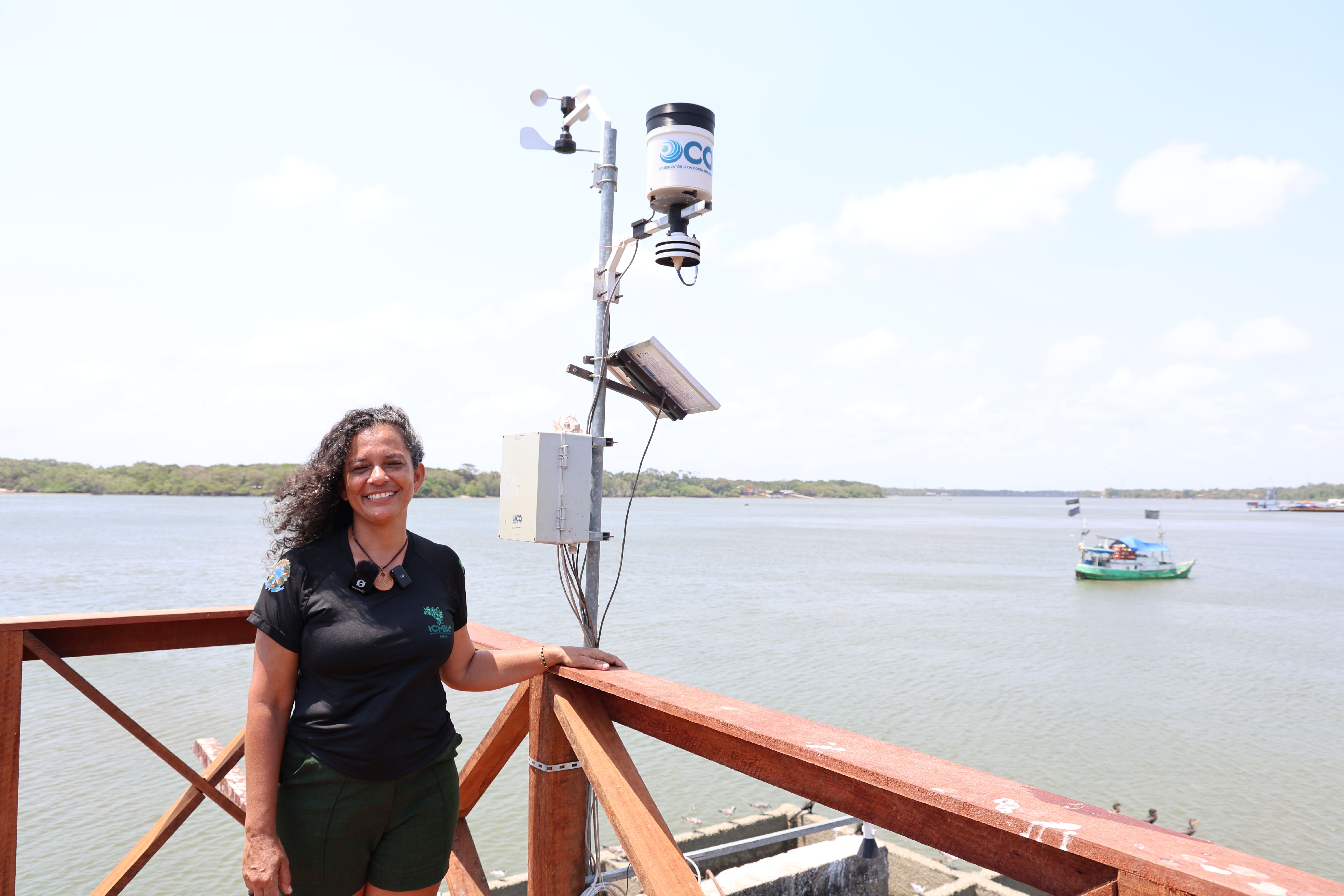
For reserve manager Lisângela Cassiano of Chico Mendes Institute for Biodiversity Conservation (ICMBio), Brazil’s protected areas authority, this represents a turning point. “This low-cost meteorological station lets us create the historical data we need to understand climate change in the region. By linking these abiotic measurements with biodiversity monitoring done together with local fishers, we finally have the evidence that can guide future management and help protect both the mangrove ecosystem and the livelihoods that depend on it,” she said.
Community monitoring meets low-cost innovation
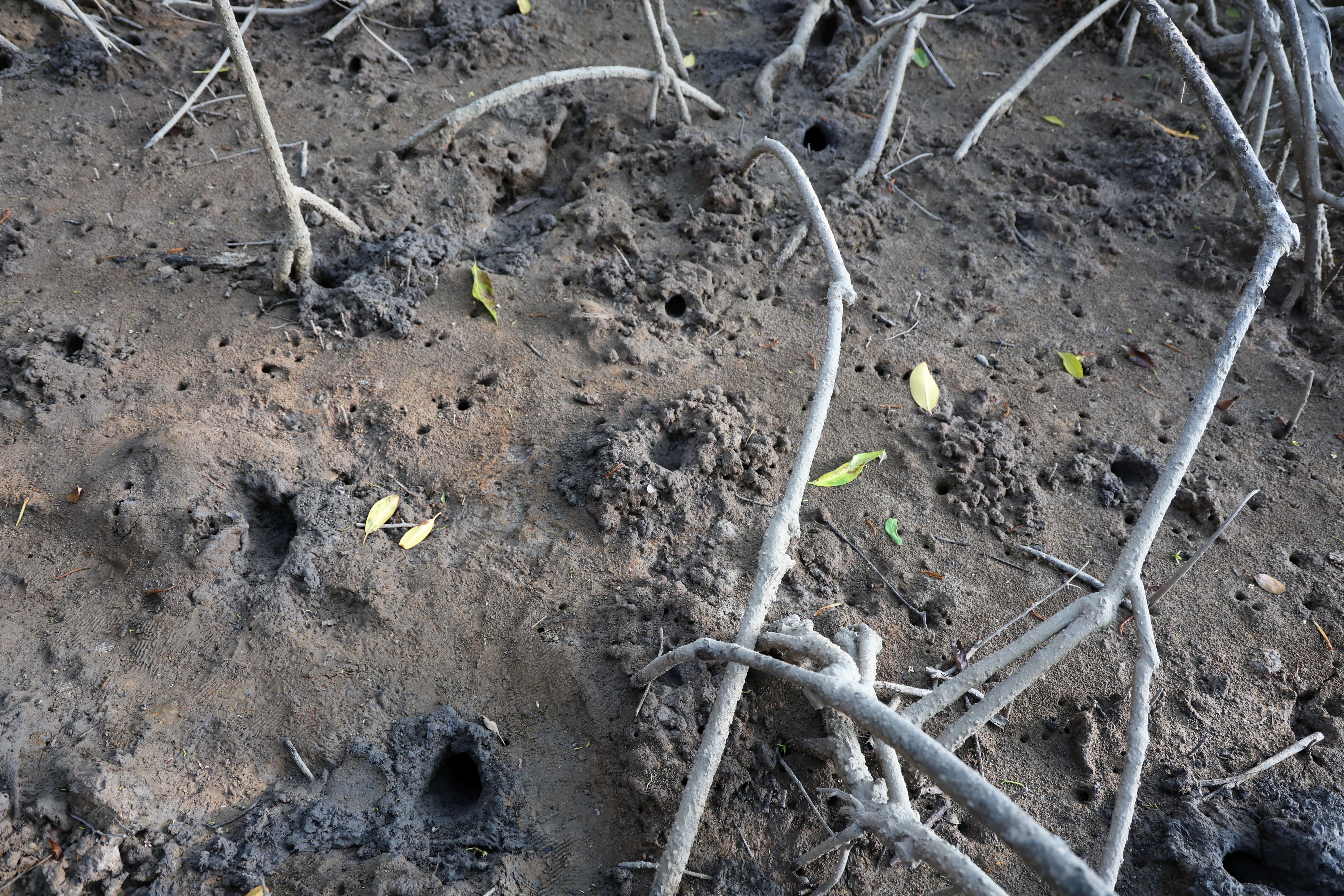
These innovations extend beyond the equipment itself. All environmental data are being integrated into an online platform designed for real-time access by fisherfolk. Once fully operational, residents will be able to monitor environmental conditions — a critical tool in a place where tides shift quickly, erosion risks can change overnight, and fishing areas may need temporary rest to protect crab populations. The system also helps the community make sense of what they are already observing. If fishers notice crabs digging deeper into the mud or tides reaching unfamiliar heights, they will be able to compare those impressions with data rather than rely solely on memory or anecdotal experience.
This is especially important for fishers like Paulo Torres, who helped create the reserve in 2001 to prevent the overexploitation of the Atlantic mangrove ghost crab (Ucides cordatus), a Near Threatened species in Brazil that is essential to the survival of nearly 8,000 people in the reserve. The crab — known locally as caranguejo-uçá — is also a key ecosystem engineer whose burrowing behaviour maintains the health of the mangrove.


“The crab is our greatest resource — it is what we eat and what supports our families,” said Paulo Torres, who presides over ASSUREMAS, the local association of users of the reserve. “But with climate change, the situation has become very hard: the heat has increased, the crabs are digging deeper, the shrimp are seeking colder water, and all of this makes our work much harder. And it is affecting our health — we spend more time in the mangrove, exposed to extreme heat, and many of us get sick from the physical strain.”

Through Tech4Nature, these lived experiences are being documented alongside scientific data for the first time. Biodiversity monitoring conducted under ICMBio’s national Monitora Programme is now combined with the meteorological station’s climate indicators, revealing how climate change influences crab populations, mangrove health and the broader ecosystem. The project includes nine mangrove and crab monitoring plots across three sites in the reserve, as well as 1,000 interviews conducted through participative crab-fishing monitoring involving residents. Local fishers help identify sampling areas and participate directly in data collection, ensuring that monitoring focuses on places most relevant to their livelihoods.
Building evidence-based resilience
This integration of traditional knowledge, community participation and modern technology is strengthening adaptive management across the reserve. Decisions about when to adjust fishing seasons, or how to prepare for extreme tides can now be based on evidence rather than intuition. The reserve’s management excellence — built over two decades of community-led stewardship — has already been recognised internationally. Soure is the first protected area in Brazil to join the IUCN Green List, a global benchmark for effective and equitable area-based conservation.
For IUCN, the success of the Tech4Nature pilot in Soure shows what is possible when science, technology and community leadership converge. “The actions carried out under the Tech4Nature project, through which IUCN, via its South America Regional Office, is supporting ICMBio, are generating essential scientific data so that authorities and local communities can make faster, more informed decisions in the face of climate impacts, such as coastal erosion and changes in the mangrove ecosystem,” said Gabriel Quijandria, IUCN Regional Director for South America. “And the recognition of the Soure extractive reserve as the first IUCN Green List protected area in Brazil shows that, even with the use of natural resources by local people, evidence-based management ensures the effective protection of biodiversity and the livelihoods that depend on it.”
As climate pressures intensify along the Amazon coast, the people of Soure are demonstrating that adaptation is not only possible but already underway. With the support of Tech4Nature, the community now has the tools to document environmental change, advocate for stronger protection and plan for a future where the mangrove — and the families it sustains — remain resilient.


Abu Dhabi, Émirats arabes unis, 11 octobre 2025 (UICN) – Plus de 1 500 publications historiques de…

Malaga, 28 janvier 2025 (UICN) - Plus de 50 experts d'Andorre, d'Espagne, de France et du Portugal…
Gland, Suisse, 9 décembre 2021 (UICN) - La destruction des zones humides provoque un déclin des…